Market Research
In today's hyper-competitive business landscape, knowing what your competitors are up to isn't just smart, it's essential for survival. According to recent market research, 90% of Fortune 500 companies extensively use competitive intelligence tools and techniques to gain an advantage, and the global competitive intelligence market is projected to reach $122.77 billion by 2033. Yet, here's the thing: most companies are still playing the guessing game when it comes to competitive intelligence. They rely on intuition, random Google searches, or outdated information that's about as useful as last year's weather forecast.
The good news? The digital age has made competitor data collection more accessible and comprehensive than ever before. Through strategic online market research, businesses can now gather actionable intelligence that actually moves the needle. Whether you're a startup trying to carve out market space or an established enterprise defending your position, understanding what data to collect, and how to collect it, can be your secret weapon.
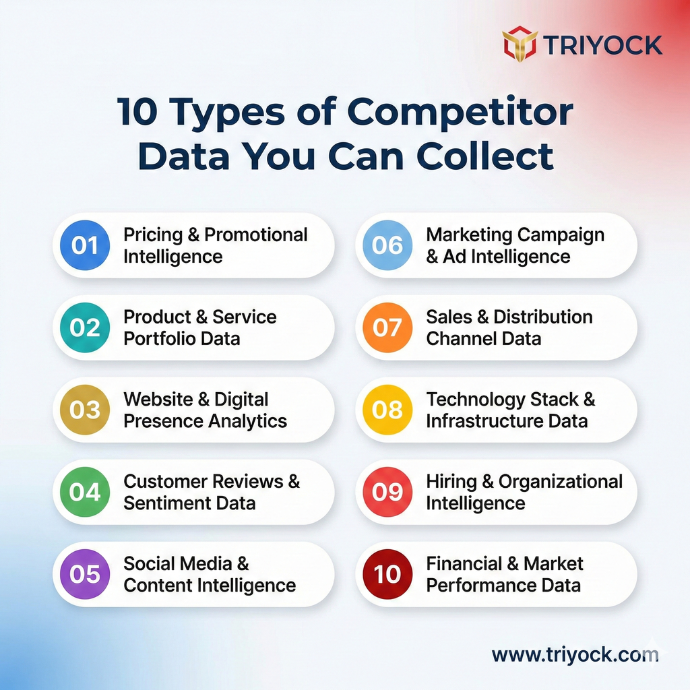
In this guide, we'll walk through 10 critical types of competitor data that professional BPO firms and market research teams collect for their clients. These aren't just theoretical concepts, these are the exact intelligence categories that drive real business decisions, from pricing strategies to product development roadmaps.
Ready to stop guessing and start knowing? Let's dive in.
1. Pricing & Promotional Intelligence
Let's start with the elephant in the room: pricing. Your competitors' pricing strategies reveal everything, their positioning, target customers, profit margins, and even their desperation levels during slow seasons.
What Data to Collect
- Base pricing structures and tier-based models
- Discount patterns including seasonal sales and volume pricing
- Promotional timing and frequency patterns
- Historical pricing trends and directional changes
- Bundle offerings and package configurations
- Hidden fees affecting total cost of ownership
- Competitor pricing responses to market changes
Collection Methods BPO Firms Use
Professional web research services employ several sophisticated approaches:
Automated web scraping captures pricing data from competitor websites at regular intervals, creating a historical database that reveals patterns. Mystery shopping programs allow researchers to pose as potential customers, uncovering pricing that's only revealed during sales conversations or through personalized quotes. Primary research with customers helps identify actual prices paid versus advertised prices, often there's a significant gap.
Some BPO teams also monitor coupon aggregator sites, affiliate marketing networks, and even check competitors' responses to price-tracking browser extensions.
Business Value
Pricing intelligence directly impacts your bottom line. It helps you position competitively without leaving money on the table, identify optimal timing for promotions, and understand which competitors are positioned as premium versus budget alternatives. One retail client we worked with discovered their competitor was systematically undercutting them by 8-12% on specific categories, armed with this data, they restructured their pricing and recovered the lost market share within two quarters.
2. Product & Service Portfolio Data
Understanding what your competitors offer, and more importantly, what they're planning to offer, gives you the foresight to stay ahead rather than play catch-up.
What Data to Collect
- Complete product catalogs with specifications and variations
- Feature comparisons across tiers and models
- Product launch timelines and rollout patterns
- Discontinued products indicating strategic shifts
- Product roadmap signals from beta programs and job postings
- Technical specifications and integration capabilities
- Packaging, branding, and positioning evolution
Collection Methods BPO Firms Use
Data collection services tackle this through multiple channels. Website monitoring and catalog extraction creates structured databases of product information. Patent and trademark monitoring reveals future direction before public announcements. Conference and trade show intelligence captures product demos and launch announcements. Customer interview programs uncover features in beta or limited release that aren't yet publicly marketed.
Advanced teams use natural language processing to analyze product descriptions and identify feature trends across entire competitive sets, revealing white spaces in the market.
Business Value
Product intelligence prevents you from getting blindsided by competitive moves and helps identify market gaps worth pursuing. It also strengthens your sales team's ability to handle objections. When your sales reps know exactly how your product compares feature-by-feature, they win more deals. A B2B software company we partnered with used product intelligence to identify that no competitor offered a specific integration their customers wanted, they built it and made it a major differentiator in their marketing.
3. Website & Digital Presence Analytics
Your competitors' websites are goldmines of intelligence, traffic patterns, SEO strategies, content themes, and user experience approaches all reveal their digital strategy and market performance.
What Data to Collect
- Website traffic volume and growth trends
- Traffic sources breakdown (organic, paid, social, referral, direct)
- Top-performing pages and content by engagement
- Keyword rankings and organic search visibility
- Backlink profiles and domain authority
- Site structure and user experience patterns
- Mobile versus desktop traffic distribution
- Geographic visitor distribution
- Engagement metrics like bounce rate and session duration
Collection Methods BPO Firms Use
Professional competitive intelligence services leverage multiple tools and techniques. SEO analysis platforms like SEMrush, Ahrefs, and Moz provide keyword rankings and backlink data. Web analytics estimation tools such as SimilarWeb and Alexa offer traffic estimates and source breakdowns. Manual website audits identify UX patterns, conversion optimization tactics, and content strategies.
Advanced BPO teams also employ content gap analysis, comparing competitors' keyword coverage against yours to identify opportunities. Some firms use click-through testing to understand which competitor ad copy and landing pages drive the highest engagement.
Business Value
Digital presence data informs your entire marketing strategy. It reveals which channels competitors invest in most heavily, which content resonates with your shared audience, and where SEO opportunities exist. A professional services firm we worked with discovered their main competitor received 40% of their traffic from a single industry directory listing, they optimized their own listing and captured a significant portion of that traffic within weeks.
4. Customer Reviews & Sentiment Data
While competitors control their marketing messages, they can't control what customers say about them. Review and sentiment data is the unfiltered truth about competitive strengths, weaknesses, and emerging issues.
What Data to Collect
- Star ratings and review scores across platforms
- Review volume trends over time
- Specific praise points in customer language
- Common complaints and pain points
- Feature requests mentioned publicly
- Customer service quality indicators
- Response rates to negative reviews
- Net Promoter Score signals
- Sentiment trends and patterns
- Competitor mentions in your own reviews
Collection Methods BPO Firms Use
Online market research teams cast a wide net for sentiment data. Review aggregation pulls data from Google, Yelp, Trustpilot, G2, Capterra, industry-specific review sites, and app stores. Sentiment analysis tools using natural language processing categorize reviews as positive, negative, or neutral and identify theme patterns.
Social media listening captures unfiltered opinions on Twitter, Reddit, Facebook groups, and LinkedIn. BPO firms often employ manual review analysis for nuanced understanding that automation misses, sarcasm, context, and subtle complaints that only human researchers catch.
Business Value
Review intelligence directly impacts product development and marketing messaging. When you see 50 reviews complaining about a competitor's poor customer onboarding, that's a clear opportunity to emphasize your superior onboarding process. An e-commerce client discovered through review analysis that their competitor's customers consistently complained about shipping delays, they made "guaranteed 2-day shipping" a cornerstone of their marketing and saw immediate conversion rate improvements.
5. Social Media & Content Intelligence
Social media isn't just for selfies and memes, it's a treasure trove of competitive intelligence about audience engagement, content strategy, and brand perception.
What Data to Collect
- Follower growth rates across all platforms
- Engagement metrics by post type and format
- Content themes driving the most engagement
- Posting frequency and optimal timing patterns
- Influencer partnerships and collaborations
- Paid social advertising presence and creative
- Video content performance and formats
- Hashtag strategies and trending conversations
- Community management and response quality
- Crisis management approaches
Collection Methods BPO Firms Use
Web research services employ sophisticated social listening tools like Brandwatch, Sprout Social, and Hootsuite to track mentions, engagement, and sentiment. Competitive social audits systematically analyze content calendars, posting patterns, and performance metrics.
Content type analysis categorizes posts (educational, promotional, entertaining, user-generated) and correlates them with engagement. Some BPO teams use paid ad libraries (Facebook Ad Library, Google Ads Transparency Center) to view competitors' active advertising campaigns and creative variations.
Advanced teams also monitor influencer partnerships through influencer marketing platforms and track employee advocacy programs to understand internal engagement and employer branding efforts.
Business Value
Social intelligence shapes your content strategy and helps you avoid wasting resources on tactics that don't work. If you see competitors getting minimal engagement on Facebook but strong performance on LinkedIn, that's a clear signal about where your B2B audience spends time. A hospitality client learned through social analysis that their competitor's user-generated content (customer photos) drove 3x more engagement than professional photography, they pivoted their strategy accordingly and saw their engagement rates double.
Overwhelmed by competitor tracking?** Let our research team monitor all 10 data types while you focus on winning.
 Contact Us
6. Marketing Campaign & Ad Intelligence
Where competitors spend their advertising budget reveals their priorities, target audiences, and strategic focus areas. Ad intelligence helps you understand not just what they're saying, but to whom and through which channels.
What Data to Collect
- Active ad campaigns across Google, Facebook, LinkedIn, and display networks
- Ad creative variations including headlines, images, and video
- Estimated ad spend by platform and campaign
- Targeting parameters like demographics and keywords
- Landing page experiences connected to ads
- Call-to-action patterns and promotional offers
- Seasonal campaign patterns and spending cycles
- Ad placement strategies across channels
- Remarketing approaches and audience segmentation
- Email marketing frequency and messaging
Collection Methods BPO Firms Use
Data collection services leverage multiple intelligence sources. Ad transparency tools like Facebook Ad Library, Google Ads Transparency Center, and LinkedIn Ad Library provide direct access to active campaigns. Competitive intelligence platforms such as AdBeat, Pathmatics, and Moat track display advertising across the web.
Mystery subscriber programs involve signing up for competitor email lists, webinars, and content downloads to map their nurture sequences and promotional cadences. Digital shelf monitoring tracks promoted content and sponsored placements across industry websites and media properties.
Some BPO firms also employ landing page archiving, capturing competitor landing pages before they're changed or removed, creating a historical record of messaging evolution.
Business Value
Ad intelligence prevents wasted spend on saturated channels and reveals messaging approaches worth testing. It also provides early warning when competitors increase investment in a market segment. A SaaS company we worked with discovered their competitor was heavily advertising a new feature, they fast-tracked development of a superior version and had it ready before the competitor's campaign finished, effectively neutralizing the competitive threat.
7. Sales & Distribution Channel Data
Understanding how competitors reach customers, not just what they sell, reveals strategic advantages and potential vulnerabilities in their business model.
What Data to Collect
- Direct versus indirect sales model emphasis
- Partner and reseller networks by geography
- Distributor relationships and exclusive arrangements
- Retail presence and physical location strategies
- E-commerce platforms and marketplace presence
- Channel partner requirements and certifications
- Geographic market coverage and expansion signals
- Sales team size from hiring data
- Strategic partnership announcements
- White-label or OEM arrangements
Collection Methods BPO Firms Use
Competitive intelligence services use creative research approaches for channel data. Partner page analysis identifies official resellers and distributors listed on competitor websites. Industry directory research uncovers partnership relationships not publicly advertised.
LinkedIn research reveals sales team expansion through job titles and hiring patterns. Press release monitoring captures partnership announcements and distribution agreements. Field research through mystery shopping visits to retail locations or calling distributors can reveal relationships and partnership terms.
Some BPO teams conduct partner interviews (speaking with channel partners as potential new vendors) to understand satisfaction levels with existing competitor relationships and partnership structures.
Business Value
Channel intelligence reveals market access opportunities and potential partnership targets. It also helps you understand competitor cost structures, companies relying heavily on distributors typically have higher costs than those with direct models. A manufacturing client discovered through channel research that their competitor's key distributor was unhappy with pricing terms, they approached the distributor, offered better terms, and gained immediate access to an established sales network.
8. Technology Stack & Infrastructure Data
The tools and technologies competitors use reveal their operational sophistication, development priorities, and potential technical advantages or limitations.
What Data to Collect
- Website technology platforms and CMS
- Marketing technology stack (CRM, automation, analytics)
- Customer service tools and systems
- Development tools from job postings
- Cloud infrastructure providers
- Security certifications and compliance frameworks
- Integration partnerships and API ecosystems
- Mobile app technology and platforms
- Data analytics and BI tools
- AI/ML capabilities and investments
Collection Methods BPO Firms Use
Technology profiling uses specialized tools and techniques. Technology detection tools like BuiltWith, Wappalyzer, and SimilarTech identify technologies powering websites and applications. Job posting analysis reveals skill requirements and technology platforms competitors are hiring for (often indicating upcoming initiatives).
Mobile app decompilation (within legal boundaries) can identify SDKs and frameworks used in competitor applications. Security certificate analysis reveals infrastructure providers and security standards. API documentation review when publicly available shows integration capabilities and technical architecture.
Business Value
Tech stack intelligence informs build-vs-buy decisions and reveals competitive advantages. If competitors use outdated technology, that's an opportunity to emphasize your modern, scalable platform. A fintech startup discovered their competitor used a payment processor with significant limitations, they built integrations with superior processors and made payment flexibility a key differentiator, winning enterprise customers who needed those capabilities.
Your competitors aren't waiting, so why are you?** Get real-time alerts on competitive moves before they impact your market share.
9. Hiring & Organizational Intelligence: Future Plans in Job Postings
Your competitors' hiring patterns are like reading their strategic roadmap before it's published. Job postings reveal expansion plans, skill gaps, and future product directions months before public announcements.
What Data to Collect
- Open job positions by department and level
- Hiring velocity indicating growth rate
- Skill requirements revealing capability gaps
- Geographic expansion through location-based hiring
- Department growth patterns and priorities
- Leadership changes and executive appointments
- Compensation ranges when disclosed
- Company culture signals in job descriptions
- Organizational structure from LinkedIn
- Employee turnover patterns and movements
Collection Methods BPO Firms Use
Organizational intelligence leverages multiple public sources. Job board monitoring tracks positions on LinkedIn, Indeed, Glassdoor, and company career pages. LinkedIn research maps organizational structures, tracks employee movements, and identifies skill gaps.
Press release analysis captures leadership announcements and organizational changes. Employee review sites like Glassdoor provide insights into culture, compensation, and internal challenges. Social media monitoring catches employee-shared content about projects and initiatives.
Some BPO firms use organizational mapping tools that aggregate public data to visualize competitor org structures and identify key decision-makers.
Business Value
Hiring intelligence provides early warning of strategic shifts and helps you stay ahead of competitive moves. It also strengthens your own recruiting by understanding compensation benchmarks and talent sources. A cybersecurity firm discovered through job posting analysis that their competitor was building a managed services division, they accelerated their own managed services roadmap and launched first, capturing early-mover advantage in the market.
10. Financial & Market Performance Data
Financial intelligence reveals competitive health, investment priorities, and strategic positioning, essential context for understanding how aggressively competitors can move and where they're vulnerable.
What Data to Collect
For Public Companies:
- Quarterly and annual financial reports
- Revenue breakdown by segment and geography
- Growth rates and performance trends
- R&D investment levels
- Sales and marketing expenditure
- Forward-looking guidance statements
- Analyst ratings and price targets
For Private Companies:
- Funding rounds and investment amounts
- Investor information and VC backing
- Estimated revenue from third-party sources
- Valuation estimates and market position
- M&A activity and acquisition interest
- Market share estimates from industry reports
Collection Methods BPO Firms Use
Financial research combines public filings with estimation techniques. SEC filing analysis (for public companies) provides detailed financial data and strategic insights from 10-Ks, 10-Qs, and proxy statements. Press release monitoring captures funding announcements and financial news.
Industry analyst reports from Gartner, Forrester, IDC often include market share and revenue estimates. Startup databases like Crunchbase, PitchBook, and CB Insights track private company funding and valuations. News monitoring catches merger talks, acquisition attempts, and strategic partnership announcements.
Business Value
Financial intelligence helps you understand competitor agility and staying power. A well-funded competitor can afford to run at losses to gain market share; a cash-strapped one might be vulnerable to acquisition or forced to raise prices. An e-commerce client learned their competitor had just burned through their last funding round with runway of only 6 months, they intensified their competitive campaign knowing the competitor couldn't afford to match marketing investments, capturing significant market share during the competitor's vulnerable period.
Turning Intelligence into Action: The BPO Advantage
Now you understand the 10 critical types of competitor data available through online market research. But here's the reality: collecting this intelligence consistently and systematically requires significant resources, specialized expertise, and dedicated technology infrastructure.
This is where partnering with a professional BPO provider transforms intelligence gathering from an overwhelming burden into a strategic advantage.
Why Should You Outsource Data Collection?
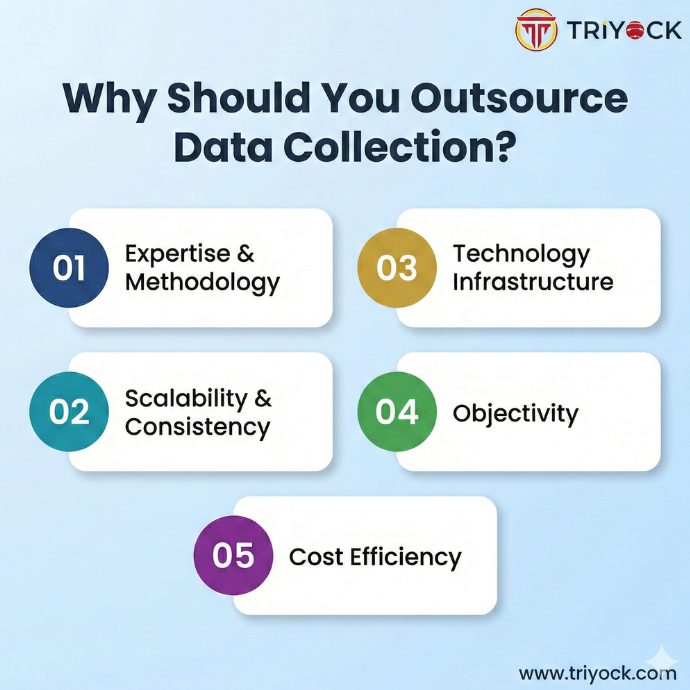
Expertise & Methodology: Professional data collection services employ researchers trained in competitive intelligence methodologies, ethical collection practices, and industry-specific nuances. They know where to look, how to verify data quality, and which signals matter most.
Scalability & Consistency: BPO teams can scale collection efforts across multiple competitors, markets, and data types simultaneously, something difficult to maintain with in-house resources that juggle multiple responsibilities.
Technology Infrastructure: Leading providers invest in sophisticated scraping tools, monitoring platforms, and analytics capabilities that would be cost-prohibitive for individual companies to license and maintain.
Objectivity: External researchers bring unbiased perspectives, catching insights that internal teams might miss due to assumptions or preconceptions about competitors.
Cost Efficiency: When you factor in hiring, training, tools, and opportunity cost of pulling internal teams off revenue-generating activities, outsourcing typically delivers 40-60% cost savings while producing higher quality intelligence.
Partner with Triyock BPO for Competitive Intelligence Excellence
At Triyock BPO, we specialize in transforming raw competitive data into strategic intelligence that drives business decisions. Our comprehensive competitor intelligence services combine cutting-edge technology with experienced research professionals who understand not just data collection, but business context.
Our Competitive Intelligence Services Include:
1. Comprehensive Competitor Profiling – Complete intelligence across all 10 data types with actionable insights delivered on schedule
2. Customized Intelligence Dashboards – Real-time competitive data visualization tailored to your industry and decision-making processes
3. Continuous Monitoring Programs – Automated alerts when competitors make significant moves in pricing, products, or market positioning
4. Market Positioning Analysis – Detailed competitive benchmarking showing exactly where you stand versus alternatives in your space
5. Strategic Intelligence Reports – Expert analysis that goes beyond raw data to deliver actionable recommendations for competitive advantage
We serve clients across SaaS, e-commerce, financial services, healthcare, manufacturing, and professional services, tailoring our online market research approaches to industry-specific competitive dynamics.
Our web research services team has helped companies identify pricing opportunities worth millions, detect competitive product launches months before market introduction, and uncover distribution partnerships that opened new markets.
Whether you need ongoing competitive monitoring or a one-time deep-dive competitor analysis, Triyock BPO delivers the intelligence you need to make confident strategic decisions.
Ready to stop guessing and start knowing? Contact Triyock BPO today to discuss how our data collection services can give you the competitive edge you need to win in your market.